
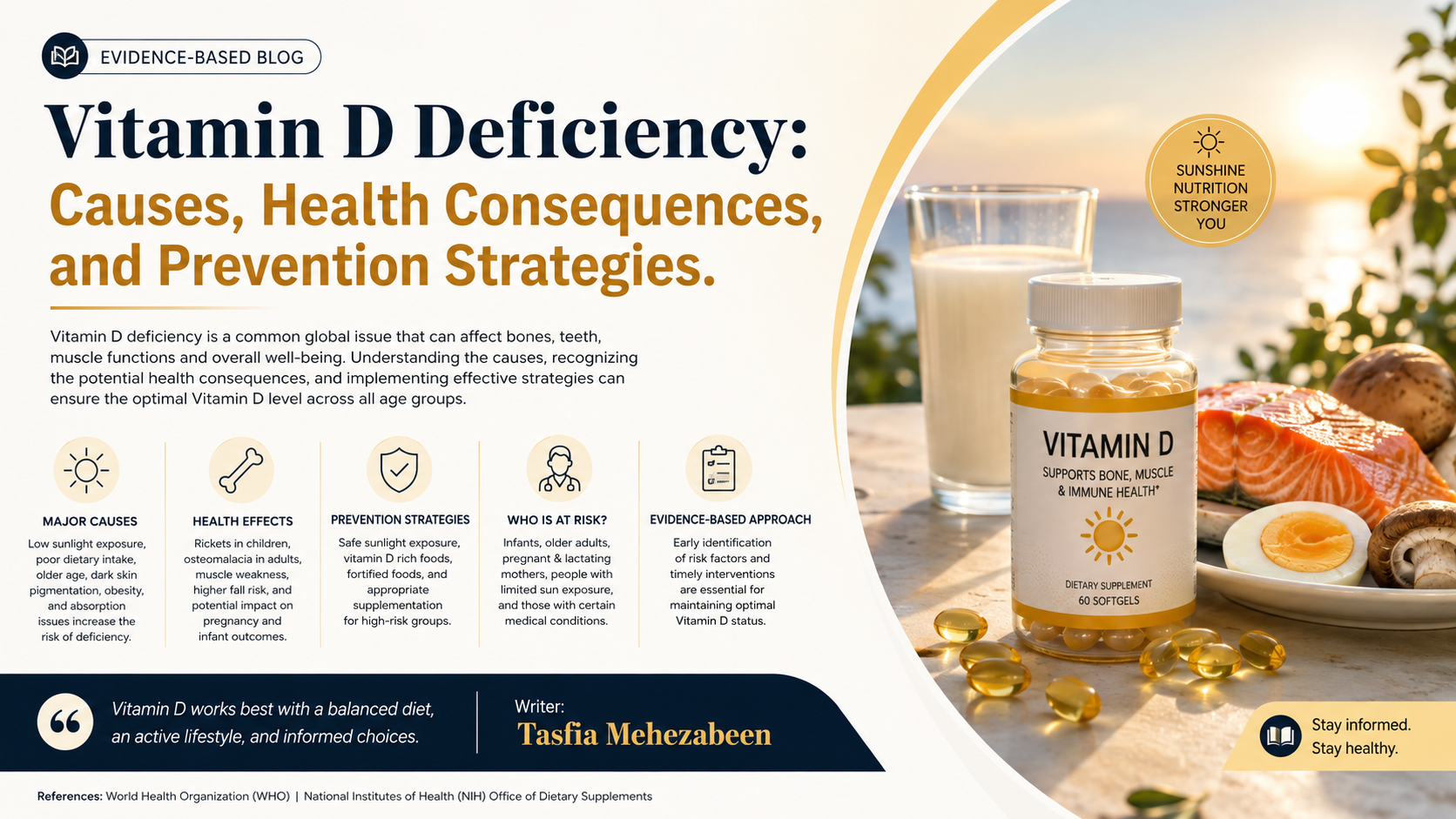
Vitamin D Deficiency: Causes, Health Consequences, and Evidence-Based Prevention Strategies
Vitamin D is an essential nutrient that plays a central role in calcium and phosphorus metabolism, bone mineralization, muscle function, and overall skeletal health. Unlike many vitamins, vitamin D can be produced naturally in the skin when it is exposed to ultraviolet B (UVB) radiation from sunlight. It can also be obtained from certain foods, fortified products, and supplements.
Despite these sources, vitamin D deficiency remains an important global public-health concern. Risk is particularly high among people with limited sun exposure, darker skin pigmentation, older adults, infants, people with certain conditions affecting fat absorption, and individuals with obesity.
Understanding why vitamin D deficiency occurs, how it affects the body, and which prevention strategies are supported by evidence is essential for protecting bone and muscle health across the life course.
What Is Vitamin D Deficiency?
Vitamin D status is generally assessed by measuring the blood concentration of 25-hydroxyvitamin D [25(OH)D], the major circulating form of vitamin D.
According to the U.S. National Institutes of Health (NIH), serum 25(OH)D concentrations below 30 nmol/L (12 ng/mL) are associated with vitamin D deficiency and can lead to rickets in children and osteomalacia in adults. Concentrations of 50 nmol/L (20 ng/mL) or higher are generally considered adequate for bone and overall health in healthy individuals. However, the ideal concentration for every individual and every health outcome has not been definitively established.
Major Causes and Risk Factors
1. Inadequate Sunlight Exposure
Sunlight is an important natural source of vitamin D. UVB radiation initiates vitamin D synthesis in the skin.
People who spend most of their time indoors, have limited outdoor activity, regularly cover most of their skin, or live in circumstances where effective UVB exposure is limited may have a higher risk of deficiency. However, excessive sun exposure is not recommended because UV radiation also increases the risk of skin damage and skin cancer.
Therefore, vitamin D prevention should not be based on prolonged or unprotected sun exposure.
2. Low Dietary Intake
Only a relatively small number of foods naturally contain substantial amounts of vitamin D. Important dietary sources include fatty fish, egg yolks and some fortified foods such as fortified milk and other dairy or plant-based products, depending on the country.
A diet consistently lacking vitamin-D-containing foods can contribute to inadequate vitamin D status, particularly when sunlight exposure is also limited.
3. Darker Skin Pigmentation
Melanin reduces the skin’s efficiency in producing vitamin D in response to UVB radiation. Consequently, people with darker skin may require greater UVB exposure to produce the same amount of vitamin D as people with lighter skin.
This does not mean that darker skin is inherently unhealthy; rather, skin pigmentation is one of several biological factors that can influence vitamin D synthesis.
4. Older Age
The skin’s capacity to synthesize vitamin D decreases with age. Older adults may therefore be more vulnerable to deficiency, particularly when combined with reduced outdoor activity, dietary insufficiency, or other health-related factors.
5. Conditions Affecting Absorption
Vitamin D is fat-soluble, meaning that disorders affecting fat digestion or absorption can reduce the body’s ability to absorb dietary vitamin D.
Conditions such as celiac disease, Crohn’s disease and ulcerative colitis, as well as certain surgical procedures such as gastric bypass, can increase the risk of deficiency.
6. Obesity
Vitamin D deficiency is also more common among people with obesity. The reasons are complex and may involve vitamin D distribution and storage in body fat as well as other metabolic factors. Some individuals with obesity may require higher vitamin D intake to achieve adequate blood concentrations.
7. Infancy and Rapid Growth
Infants can be vulnerable to vitamin D deficiency because they have relatively limited vitamin D stores and high requirements during rapid growth. Severe deficiency during childhood can result in nutritional rickets.
Health Consequences of Vitamin D Deficiency
Vitamin D has its strongest and most clearly established role in bone and mineral metabolism. Severe or prolonged deficiency can have significant skeletal consequences.
1. Rickets in Children
Severe vitamin D deficiency can cause nutritional rickets, a condition in which growing bones fail to mineralize properly.
Children with rickets may develop:
- Poor or delayed growth
- Bone pain and weakness
- Skeletal deformities
- Bowing of the legs
- Delayed motor development
- Dental abnormalities
Early recognition and treatment are important because prolonged deficiency during childhood can interfere with normal skeletal development.
2. Osteomalacia in Adults
In adolescents and adults, severe vitamin D deficiency can cause osteomalacia, in which newly formed bone is inadequately mineralized.
It may present with:
- Bone pain
- Muscle weakness
- Difficulty walking or climbing stairs
- Increased physical limitations
Osteomalacia should be distinguished from osteoporosis: osteomalacia primarily involves defective mineralization, whereas osteoporosis is characterized by reduced bone mass and deterioration of bone structure.
3. Muscle Weakness and Falls
Vitamin D is also important for normal muscle function. Vitamin D deficiency can be associated with muscle weakness and impaired physical performance, particularly in older adults.
Because muscle weakness and impaired mobility can contribute to falls, maintaining adequate vitamin D status is one component of a broader strategy for maintaining musculoskeletal health in later life.
However, vitamin D supplementation should not be viewed as a universal treatment for preventing falls in every older adult; individual risk factors and clinical circumstances matter.
4. Bone Health and Fracture Risk
Vitamin D supports calcium absorption and normal bone mineralization. Severe deficiency can therefore compromise skeletal health.
The relationship between vitamin D and osteoporosis or fracture prevention, however, is more complex than simply stating that vitamin D deficiency causes osteoporosis. Bone health depends on multiple factors, including calcium intake, physical activity, age, hormones, genetics, body composition and other nutrients.
For this reason, vitamin D should be considered as part of a comprehensive bone-health strategy rather than as a stand-alone solution.
5. Pregnancy and Infant Health
Vitamin D is important for maternal and fetal skeletal development. Vitamin D deficiency is common in some pregnant populations, and observational research has associated low vitamin D status with several adverse pregnancy outcomes.
However, association does not automatically establish causation, and evidence regarding routine vitamin D supplementation during pregnancy remains mixed. The World Health Organization currently does not recommend routine vitamin D supplementation for all pregnant women solely to improve maternal and perinatal outcomes because the evidence for overall clinical benefit remains insufficient.
Pregnant women should therefore receive individualized nutritional guidance rather than taking high-dose vitamin D without professional supervision.
Evidence-Based Prevention Strategies
Preventing vitamin D deficiency requires a balanced approach that considers sunlight exposure, dietary intake, individual risk factors and, when appropriate, supplementation.
1. Maintain Safe Sun Exposure
UVB exposure enables the skin to synthesize vitamin D. However, there is no universally applicable amount of sunlight that guarantees adequate vitamin D because synthesis varies according to:
- Skin pigmentation
- Age
- Season
- Geographic location
- Time of day
- Clothing
- Sunscreen use
- Environmental conditions
Therefore, deliberately prolonged or unprotected sun exposure should not be recommended as a primary medical treatment for vitamin D deficiency.
Sun-safety practices remain important.
2. Include Vitamin-D-Rich Foods
A varied, balanced diet can help support vitamin D intake.
Useful sources include:
- Fatty fish such as salmon and sardines
- Egg yolks
- Fortified milk
- Fortified plant-based beverages
- Fortified cereals and other fortified foods
- Some types of mushrooms, particularly those exposed to UV light
Food fortification can also play an important population-level role. In 2025, WHO issued evidence-informed guidance supporting fortification of edible oils and fats with vitamins A and D as one possible public-health strategy for addressing micronutrient inadequacies.
3. Consider Supplementation When Appropriate
Vitamin D supplements can be useful for individuals who are at increased risk of deficiency or who have confirmed deficiency.
Higher-risk groups may include:
- Infants
- Older adults
- People with very limited sun exposure
- People with darker skin pigmentation
- Individuals with conditions causing fat malabsorption
- People who have undergone bariatric surgery
- Some people with obesity
The appropriate dose depends on age, dietary intake, blood vitamin D status, medical conditions and other individual factors. High-dose supplementation should not be undertaken routinely without professional advice because excessive vitamin D can cause toxicity, including hypercalcemia.
4. Address Calcium and Overall Bone Nutrition
Vitamin D and calcium work together to maintain healthy bones. Adequate calcium intake is particularly important during childhood, adolescence, pregnancy and later life.
However, calcium and vitamin D should be considered within the context of the overall diet rather than as isolated nutrients.
Adequate protein, regular weight-bearing physical activity and other aspects of a balanced lifestyle also contribute to long-term skeletal health.
5. Identify High-Risk Individuals Early
Routine vitamin D testing is not necessarily required for every healthy person. Instead, assessment may be more appropriate when a person has symptoms, significant risk factors or a clinical condition that makes deficiency more likely.
When testing is clinically indicated, serum 25(OH)D is the standard marker used to assess vitamin D status.
The Bottom Line
Vitamin D deficiency is an important nutritional and public-health concern, particularly among populations with limited sun exposure, darker skin, older age, certain medical conditions, obesity or inadequate dietary intake.
Its most firmly established consequences involve bone and muscle health. Severe deficiency can cause rickets in children and osteomalacia in adults, while inadequate vitamin D status may contribute to impaired musculoskeletal health.
Prevention should focus on a balanced combination of appropriate dietary intake, safe outdoor activity, food fortification where appropriate, identification of high-risk individuals and clinically appropriate supplementation.
Most importantly, vitamin D should not be viewed as a “miracle vitamin.” Although it is essential for health, supplementation beyond correcting deficiency has not been proven to prevent every chronic disease or health problem. Evidence-based nutrition means focusing on what the evidence clearly supports while avoiding claims that go beyond the available science.
Healthy bones begin with adequate nutrition but optimal health requires much more than a single nutrient.
Key Evidence Sources
- World Health Organization (WHO): Vitamin D in the Eastern Mediterranean Region: A Technical Guide.
- National Institutes of Health (NIH), Office of Dietary Supplements: Vitamin D Health Professional Fact Sheet.
- World Health Organization: Vitamin D Supplementation During Pregnancy.
- World Health Organization: Guideline on Fortification of Edible Oils and Fats with Vitamins A and D for Public Health.
- World Health Organization: Nutritional Interventions Update Vitamin D Supplements During Pregnancy.
Written By
Tasfia Mehezabeen
Graduate Content Writer , Content Writing Masterclass Batch 1